Scientists try to explain near-death experiences.
There are those who believe that science will eventually explain everything—including our enduring belief in heaven. The thesis here is very simple: heaven is not a real place, or even a process or a supernatural event. It's something that happens in your brain as you die.
I first encountered this idea as I was researching my new book, Heaven: Our Enduring Fascination With the Afterlife. I was having lunch with my friend and colleague Christopher Dickey, who told me that his father, the writer James Dickey, had a fantasy of heaven in which all of his closest friends were sitting around a swimming pool, chatting. "There was nothing special about the pool itself," wrote Chris in Summer of Deliverance: A Memoir of Father and Son. "Nobody walked on the water. And he never told me who the friends were ... But what he took away from the dream was a sense of contentment, of being at ease with himself and the world, as if he had gotten a preview of heaven. He called that place 'The Happy Swimming Pool.' " Chris believes that everything we think we know about heaven happens in the moments before death. After that, there's nothing.
Science cannot definitively proof or disprove Chris's theory, but some scientists are willing to take guesses. And these guesses are based, in part, on a growing body of research around near-death experience (NDE). According to a 2000 article in The Lancet, between 9 and 18 percent of people who have been demonstrably near death report having had such an experience. And surveys of NDE accounts show great similarities in the details. People who have had NDEs describe—like some religious visionaries—a tunnel, a light, a gate, or a door, a sense of being out of the body, meeting people they know or have heard about, finding themselves in the presence of God, and then returning, changed.
Andrew Newberg is an associate professor in the radiology department at the University of Pennsylvania who has made his reputation studying the brain scans of religious people (nuns and monks) who have ecstatic experiences as they meditate. He believes the "tunnel" and "light" phenomena can be explained easily. As your eyesight fades, you lose the peripheral areas first, he hypothesizes. "That's why you'd have a tunnel sensation." If you see a bright light, that could be the central part of the visual system shutting down last.
Newberg puts forward the following scenario, which, he emphasizes, is guesswork. When people die, two parts of the brain, which usually work in opposition to each other, act cooperatively. The sympathetic nervous system—a web of nerves and neurons running through the spinal cord and spread to virtually every organ in the body—is responsible for arousal and excitement. It gets you ready for action. The parasympathetic system—with which the sympathetic system is entwined—calms you down and rejuvenates you. In life, the turning on of one system prompts the shutting down of the other. The sympathetic nervous system kicks in when a car cuts you off on the highway; the parasympathetic system is in charge as you're falling asleep. But in the brains of people reporting mystical experiences—and, perhaps, in death—both systems are fully "on," giving a person the sensation both of slowing down, being "out of body," and of seeing things vividly, including memories of important people and past events. Does Newberg believe, then, that visions of heaven are merely chemical-neurological events? He laughs nervously. "I don't know." He laughs again. "It's, um … I don't think we have enough evidence to say."
Since at least the 1980s, scientists have theorized that NDEs occur as a kind of physiological self-defense mechanism. In order to guard against damage during trauma, the brain releases protective chemicals that also happen to trigger intense hallucinations. This theory gained traction after scientists realized that virtually all the features of an NDE—a sense of moving through a tunnel, and "out of body" feeling, spiritual awe, visual hallucinations, and intense memories—can be reproduced with a stiff dose of ketamine, a horse tranquilizer frequently used as a party drug. In 2000, a psychiatrist named Karl Jansen wrote a book, Ketamine: Dreams and Realities, in which he interviewed a number of recreational users. One of them, who called himself K.U., describes one of his drug trips this way: "I came out into a golden Light. I rose into the Light and found myself having an unspoken interchange with the Light, which I believed to be God." Dante said it better, but the vision is astonishingly the same.
source....
Tuesday, March 30, 2010
Sunday, March 28, 2010
Moon and Saturn
The bright Moon keeps company with a bright planet the next couple of nights. They are in good view in the east by 8 or 9 o'clock. The planet Saturn stands to the left or lower left of the Moon tonight, and looks like a bright golden star.
- Quads, hailing from Grand Marsh Observatory atop Elk Castle Hill
- Quads, hailing from Grand Marsh Observatory atop Elk Castle Hill

Wednesday, March 24, 2010
a beautiful grouping
The Moon, the planet Mars, and the twins of Gemini form a beautiful grouping the next couple of nights. Tonight, Mars is to the left of the Moon as darkness falls, with Gemini's twins -- the stars Pollux and Castor -- above them.
- Quads, hailing from Grand Marsh Observatory atop Elk Castle Hill
- Quads, hailing from Grand Marsh Observatory atop Elk Castle Hill
Sunday, March 21, 2010
The planet Saturn
The planet Saturn is putting on a good show this month. It lines up opposite the Sun, so it rises at sunset and remains in view all night. It is at its brightest, too. The golden planet outshines all but a handful of other planets and stars.
- Quads, hailing from Grand Marsh Observatory atop Elk Castle Hill
- Quads, hailing from Grand Marsh Observatory atop Elk Castle Hill
Spring In The Necedah National Wildlife Refuge
Prerecorded 3/14/10:
It was a great day for a ride! First time we hit 60° since the beginning of November.

The Yellow River has some water in it today! There is a bridge up ahead, but we won't be going any farther this time. Rough road or not, I'll have to take the sign's word for it.

Look at Mrs. posing for the picture!

Camping, boating, fishing, all at the same time! A recipe for the perfect vacation.

Mud.

Scenery break.

Bigfoot! Where are you? Not here, not today.

Saw the first robin today and the pussy willows are blooming.

Nice.

No ice.

Ridin' the wave. The camera was swaying slightly because I had it attached to a post that had water rushing around it. I guess the post was a little loose.
- Quads, hailing from Grand Marsh Observatory atop Elk Castle Hill


- Quads, hailing from Grand Marsh Observatory atop Elk Castle Hill
ISS Tonight
21 Mar -1.8 19:35:30 WNW 34
- Quads, hailing from Grand Marsh Observatory atop Elk Castle Hill
- Quads, hailing from Grand Marsh Observatory atop Elk Castle Hill
Saturday, March 20, 2010
EQUINOX SKY SHOW
Northern Spring begins today. To celebrate the occasion, Nature is putting on an equinox sky show. Look west after sunset for a close encounter between the crescent Moon and the Pleiades star cluster (Seven Sisters). It's a beautiful view, and a nice way to experience the equal night.
- Quads, hailing from Grand Marsh Observatory atop Elk Castle Hill
- Quads, hailing from Grand Marsh Observatory atop Elk Castle Hill
State Parks, trails and forests offer variety of new and traditional activities
Wisconsin state parks are gearing up for another summer season which park managers anticipate will be busy. A number of new and updated facilities and programs will greet park and trail users in 2010 including an entirely new campground at Harrington Beach State Park, additional new campsites at Willow River State Park, more sites equipped with electric hookups across the state and all new activities for the Wisconsin Explorer program for kids.
“Wisconsin state parks attracted nearly 14 million visitors in 2009,” said Wisconsin Department of Natural Resources Secretary Matt Frank. “State Park System properties are great destinations and activity centers for families seeking healthy outdoor recreation opportunities.”
Wisconsin has more than 4,600 campsites available in state parks, forests and recreation areas offering camping in a variety of habitats from deep forest to unglaciated hill and valley with spectacular overlooks. Many campsites are reservable.
Camp site reservations are continuing to trend upward and were up close to 2 percent through the end of February compared to 2009 according to parks officials. 2009 reservations saw an increase of 6.6 percent over 2008. The number of campsites is expected to grow again in 2011 when an all new campground will be ready for visitors at Governor Thompson State Park.
Trails
Wisconsin state parks offer more than 3,000 miles of recreational trails for hiking, biking, horseback riding and other activities. Mountain bikers visiting the Northern Unit of the Kettle Moraine State Forest will want to check out new trails on this unit of the forest and horseback riders will find improved roads, an improved campsite and shower building and renovated stables. Bikers visiting Blue Mound State Park will also find a new feature for riders, a bike camping site just off the Military Ridge State Trail.
Other completed trail projects include reopening of two washout-resistant trails in Wyalusing State Park. The two trails were washed out by floods in the spring of 2007. And, ATV riders can look forward to rebuilt trails in Richard Bong State Recreation Area opening in June 2010.
Get Outdoors Wisconsin DNR
State parks are a popular family-friendly recreational opportunity within easy reach of nearly all Wisconsin citizens. In addition to traditional activities such as camping, picnicking, hiking and swimming, the Get Outdoors Wisconsin program is entering its third year with programs that encourage kids and families to explore the natural environment offered by a park and the nature near their home. Many park properties will also offer guided hikes, explorations and skills demonstrations through the season as part of the Get Outdoors Wisconsin program. Information on events and activities is available online.
The Wisconsin State Park System lists 104 properties including 48 state parks, eight southern forests, six recreational areas and 42 trails. Additional properties open to the public for recreation include northern state forests such as Northern Highland-American Legion, Brule River, Flambeau River, Black River, and Governor Knowles.
Other things to do, other places to visit
The DNR maintains a searchable database of properties including wildlife areas, boat launches, shore fishing access points and state natural areas and a unique automobile based statewide nature trail, the Great Wisconsin Birding and Nature Trail, which highlights easily accessible high-quality nature viewing locations
“Wisconsin offers literally hundreds of public properties featuring a wide range of land and water-based outdoor recreation,” says Dan Schuller, Director of State Parks and Recreation. “There is something for almost every kind of outdoor adventure from newer activities such as geocaching to traditional pastimes like camping, hiking and picnics. If you visit one of our properties please let staff know) your thoughts. We value visitor feedback as we continually work to improve our facilities.”
Nationally, state parks provide a tremendous economic benefit to area communities estimated at $20 billion. Approximately 6,000 state park units attracted more than 725 million visits in 2009.
FOR MORE INFORMATION CONTACT: Wisconsin State Parks (608) 266-2181
source....
“Wisconsin state parks attracted nearly 14 million visitors in 2009,” said Wisconsin Department of Natural Resources Secretary Matt Frank. “State Park System properties are great destinations and activity centers for families seeking healthy outdoor recreation opportunities.”
Wisconsin has more than 4,600 campsites available in state parks, forests and recreation areas offering camping in a variety of habitats from deep forest to unglaciated hill and valley with spectacular overlooks. Many campsites are reservable.
Camp site reservations are continuing to trend upward and were up close to 2 percent through the end of February compared to 2009 according to parks officials. 2009 reservations saw an increase of 6.6 percent over 2008. The number of campsites is expected to grow again in 2011 when an all new campground will be ready for visitors at Governor Thompson State Park.
Trails
Wisconsin state parks offer more than 3,000 miles of recreational trails for hiking, biking, horseback riding and other activities. Mountain bikers visiting the Northern Unit of the Kettle Moraine State Forest will want to check out new trails on this unit of the forest and horseback riders will find improved roads, an improved campsite and shower building and renovated stables. Bikers visiting Blue Mound State Park will also find a new feature for riders, a bike camping site just off the Military Ridge State Trail.
Other completed trail projects include reopening of two washout-resistant trails in Wyalusing State Park. The two trails were washed out by floods in the spring of 2007. And, ATV riders can look forward to rebuilt trails in Richard Bong State Recreation Area opening in June 2010.
Get Outdoors Wisconsin DNR
State parks are a popular family-friendly recreational opportunity within easy reach of nearly all Wisconsin citizens. In addition to traditional activities such as camping, picnicking, hiking and swimming, the Get Outdoors Wisconsin program is entering its third year with programs that encourage kids and families to explore the natural environment offered by a park and the nature near their home. Many park properties will also offer guided hikes, explorations and skills demonstrations through the season as part of the Get Outdoors Wisconsin program. Information on events and activities is available online.
The Wisconsin State Park System lists 104 properties including 48 state parks, eight southern forests, six recreational areas and 42 trails. Additional properties open to the public for recreation include northern state forests such as Northern Highland-American Legion, Brule River, Flambeau River, Black River, and Governor Knowles.
Other things to do, other places to visit
The DNR maintains a searchable database of properties including wildlife areas, boat launches, shore fishing access points and state natural areas and a unique automobile based statewide nature trail, the Great Wisconsin Birding and Nature Trail, which highlights easily accessible high-quality nature viewing locations
“Wisconsin offers literally hundreds of public properties featuring a wide range of land and water-based outdoor recreation,” says Dan Schuller, Director of State Parks and Recreation. “There is something for almost every kind of outdoor adventure from newer activities such as geocaching to traditional pastimes like camping, hiking and picnics. If you visit one of our properties please let staff know) your thoughts. We value visitor feedback as we continually work to improve our facilities.”
Nationally, state parks provide a tremendous economic benefit to area communities estimated at $20 billion. Approximately 6,000 state park units attracted more than 725 million visits in 2009.
FOR MORE INFORMATION CONTACT: Wisconsin State Parks (608) 266-2181
source....
Friday, March 19, 2010
ISS Tonight
19 Mar -2.1 20:21:20 WNW 35
- Quads, hailing from Grand Marsh Observatory atop Elk Castle Hill
- Quads, hailing from Grand Marsh Observatory atop Elk Castle Hill
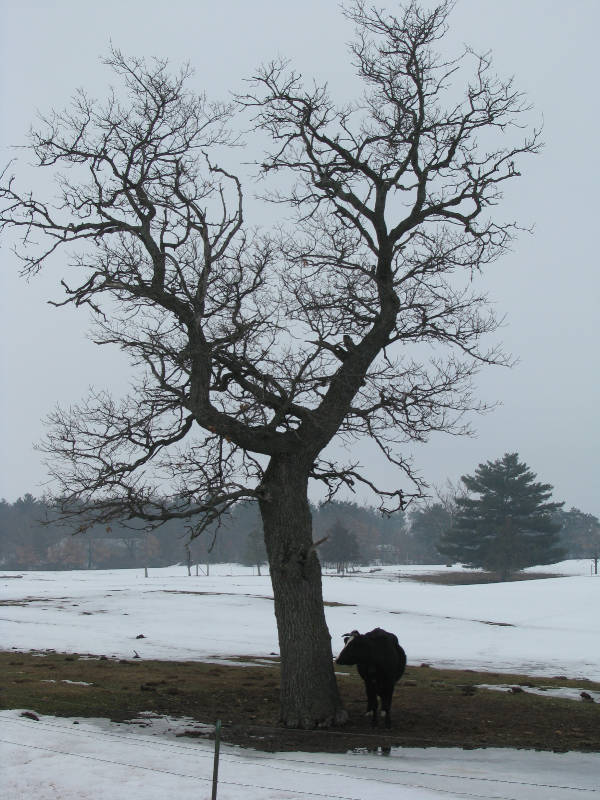
MOOOOO!
Prerecorded 3/9/10:
The cows are happy that some of the snow is melting and now they have a place to run. Not that they run very often anyway!


- Quads, hailing from Grand Marsh Observatory atop Elk Castle Hill
The cows are happy that some of the snow is melting and now they have a place to run. Not that they run very often anyway!



- Quads, hailing from Grand Marsh Observatory atop Elk Castle Hill
Subscribe to:
Posts (Atom)